

- What is a Hearing Aid Cleaning? - March 1, 2026
- How Diet Affects Your Hearing - February 1, 2026
- New Hearing Aid Technology Can Protect from Dementia - January 26, 2026
Regular hearing aid cleaning is essential to protect your investment, extend the life of your devices, and avoid costly repairs. Today’s hearing aids are highly advanced electronic instruments, but that makes them especially vulnerable to everyday exposure. Earwax, body oils, dead skin cells, moisture, and individual body chemistry can all interfere with performance and, over time, cause permanent damage.
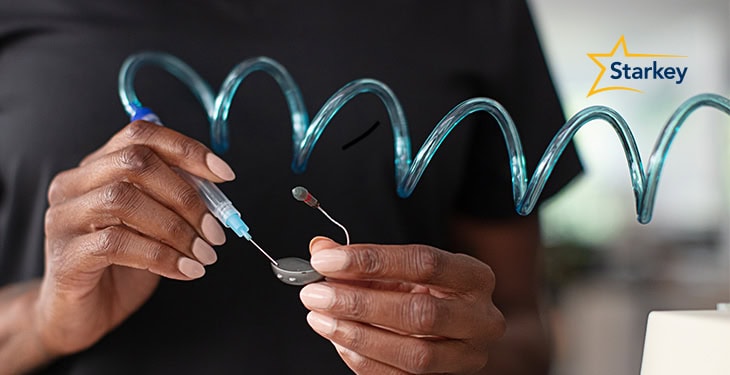
In years past, hearing aid maintenance was fairly basic. Custom hearing aids were often cleaned with little more than a wax pick, and the care provided in an office wasn’t much different from what users could do themselves at home. In 2026, professional hearing aid care has evolved significantly. A well-equipped hearing care office should now use medical-grade disinfectants, specialized picks and brushes for removing wax from receivers and microphones, contact cleaners for charging contacts in both the hearing aid, and if you bring it in, the charger itself, and—most importantly—professional vacuum systems with precision needle tips to safely remove debris from delicate internal components and a professional-grade dehumidifier to remove all moisture from the aids.
Modern hearing aid repairs can be expensive, especially as devices now include rechargeable batteries, wireless connectivity, and sophisticated digital processors. One of the most common causes of repair is wax blockage in the speaker. When wax is allowed to build up for too long, it can permanently reduce sound quality or cause the hearing aid to fail altogether. By the time many patients bring in a “dead” hearing aid, it may be too late to restore it to its original performance.
For most patients, quarterly professional cleanings are recommended. Individuals who naturally produce more earwax, have dry or flaky skin, or live in humid environments may benefit from more frequent cleanings to maintain optimal sound quality and reliability.
If you wear behind-the-ear (BTE) hearing aids, regular tubing replacement is also critical. Over time, tubing is affected by body chemistry and environmental exposure, causing it to discolor, stiffen, and harden. When tubing becomes hard, it can change the acoustics of the hearing system and negatively affect how you hear. Tubing should always feel soft and flexible—if it doesn’t, it’s time for a replacement.
Old tubing is also more likely to crack or break, which can cause the hearing aid to fall off the ear and potentially suffer damage or become lost altogether. In addition, hardened tubing is more difficult for providers to replace and may require extra labor or parts. As tubing ages, it can also become clogged with earwax, moisture, and debris, blocking sound before it ever reaches your ear. The openings of microphones, receivers, charging contacts, and battery compartments in behind-the-ear hearing aids should also be professionally vacuumed and inspected during routine maintenance.
Regular hearing aid cleaning and preventive care are the best ways to protect your hearing health and your financial investment. The better you care for your hearing aids, the longer they will last—and the better they will perform.
At Welsch Hearing Aid Company, we make preventive care easy. With every direct hearing aid sale, we offer WelschCare, which includes FREE quarterly hearing aid cleanings for the life of your warranty, a $600 value, at minimum. We proudly service and clean all brands of hearing aids. Call Welsch Hearing Aid Company at 920-452-0213 to schedule a hearing aid cleaning today!